
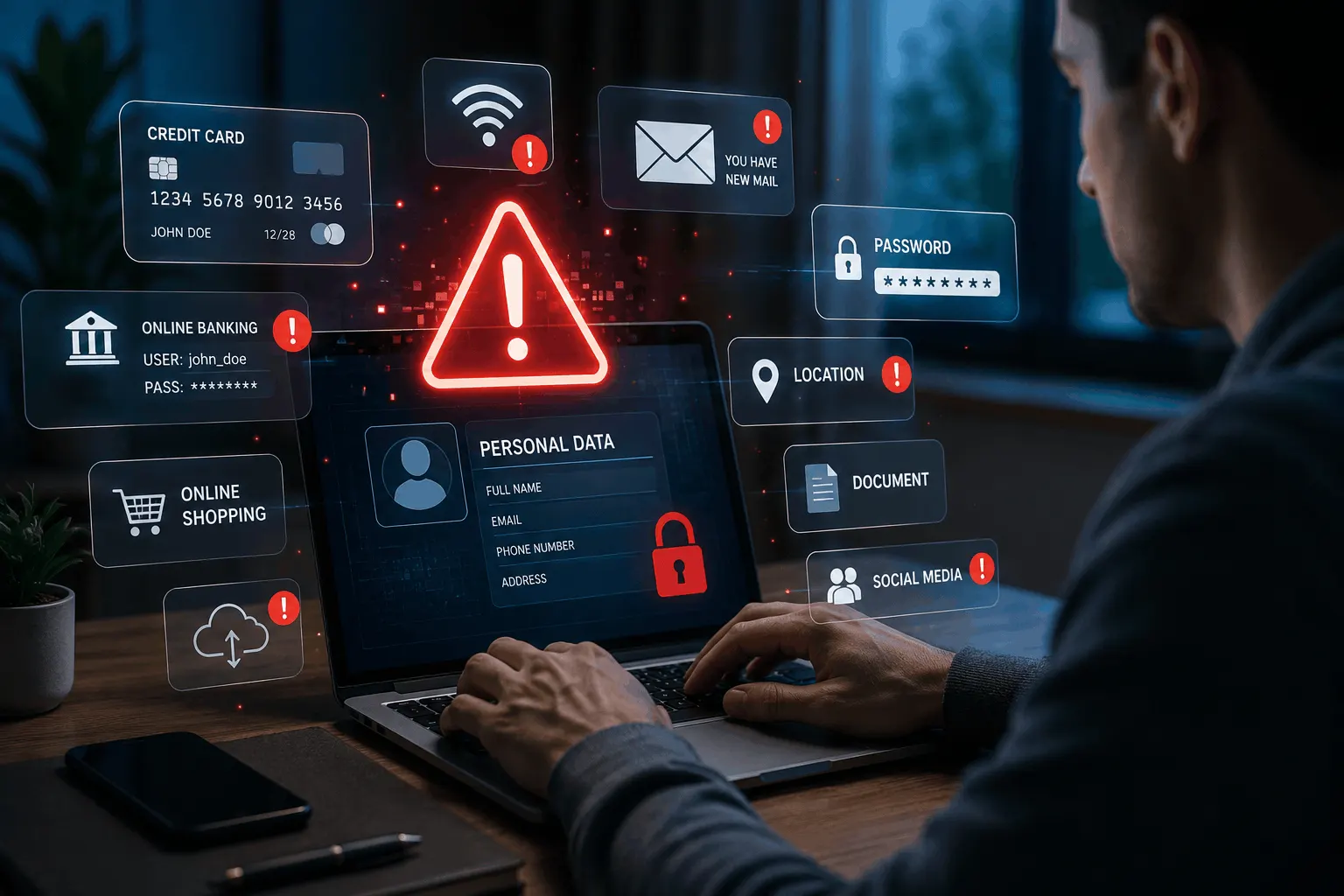
Businesses in Palghar are increasingly using digital tools to manage customer information, communicate with suppliers, process payments, maintain records and coordinate daily operations. From small businesses in Palghar town to manufacturing companies in Boisar and Tarapur MIDC, technology plays an important role in modern business operations.
However, greater digital dependence also creates security risks. A fraudulent email, compromised business account, stolen password or malicious attachment can expose confidential information, interrupt operations or lead to financial losses.
Professional cybersecurity solutions help businesses identify security weaknesses, reduce preventable risks and prepare to respond when an incident occurs. Cybersecurity is not only a concern for large enterprises. Small and medium-sized businesses also need practical safeguards suited to their systems, budgets and operational requirements.
For businesses in Palghar, the right approach combines secure technology, trained employees, reliable backup procedures and a clear incident-response plan.
1. Why Cybersecurity Matters for Businesses in Palghar
Palghar has businesses across manufacturing, trading, logistics, professional services and other sectors. Their technology requirements differ, but many depend on email, online payments, digital documents, customer databases and connected devices.
For example, a manufacturing business may store supplier information, purchase orders, production records and invoices digitally. A service company may depend on customer databases, cloud applications and employee accounts. A logistics business may use digital records to coordinate deliveries and communicate with customers.
If these systems are compromised, the impact may extend beyond the affected computer.
Potential consequences include:
- Financial loss: Fraudulent payment requests, unauthorised transactions or compromised business accounts.
- Data exposure: Unauthorised access to customer, employee, supplier or commercial information.
- Operational disruption: Inaccessible files, locked systems or interrupted business applications.
- Reputational damage: Reduced customer confidence following a security incident.
- Recovery expenses: Time and resources spent investigating, restoring systems and responding to affected customers.
These are possible consequences, not inevitable outcomes of using digital technology. The objective of cybersecurity is to reduce the likelihood and impact of such incidents.
2. Common Cybersecurity Threats Businesses Should Understand
Understanding common threats helps business owners recognise where preventive measures are needed.
Phishing emails and impersonation
Phishing occurs when attackers use deceptive messages or websites to trick people into revealing information, sharing passwords or opening malicious files.
A message may appear to come from a supplier, bank, senior manager or service provider. It might request an urgent payment, ask an employee to verify an account or include a suspicious attachment.
What businesses can do:
- Verify unusual payment requests through a separate, trusted communication channel.
- Check sender addresses and website domains carefully.
- Avoid opening unexpected attachments or entering passwords through unfamiliar links.
- Train employees to report suspicious messages rather than simply deleting evidence of a potential incident.
Business email compromise
Business email compromise involves the misuse of legitimate business email accounts or impersonation of trusted contacts to deceive an organisation.
For example, an employee might receive a message appearing to come from a manager requesting a change to a vendor's bank details. If the change is accepted without independent verification, the business could transfer money to a fraudulent account.
Use multi-factor authentication, restrict access to business email accounts and establish independent approval procedures for payment or bank-detail changes.
Ransomware and malicious software
Ransomware can prevent access to files or systems and may be accompanied by threats to disclose stolen information. Other malicious software can monitor activity, steal credentials or compromise devices.
Businesses should maintain tested backups, keep supported software updated, restrict unnecessary permissions and use appropriate endpoint protection. Backups should be protected against unauthorised modification or deletion.
Weak passwords and unauthorised access
Shared passwords, reused credentials and accounts that remain active after employees leave can expose business systems.
Use unique passwords, a reputable password manager where appropriate, multi-factor authentication and role-based access controls. Employees should receive only the access necessary for their responsibilities.
Unsafe devices, networks and software
Unsecured Wi-Fi, outdated applications, unmanaged devices and poorly configured cloud accounts can create additional entry points for attackers.
Businesses should maintain an inventory of important devices and applications, install security updates promptly, secure remote access and review access permissions periodically.
3. Cyber Fraud Awareness Is Important for Employees and Business Owners
Cybersecurity is not limited to protecting company servers and office computers. People can also be targeted through scams involving money, employment, personal relationships and social media.
The Indian government's National Cyber Crime Reporting Portal provides awareness resources covering financial fraud, job fraud, matrimonial fraud and safe social media use.
These topics can form a useful starting point for cybersecurity awareness activities in Palghar. Local campaign organisers should coordinate with Palghar Police to confirm which examples, warnings and reporting instructions are most relevant to the community.
Businesses can support awareness by sharing verified guidance with employees, conducting short training sessions and explaining how suspicious requests should be reported internally.
Financial fraud
Fraudsters may impersonate banks, suppliers, customers or officials to obtain money or financial information. Businesses should verify payment instructions, avoid sharing confidential banking details through untrusted channels and establish approval checks for unusual transactions.
Job and recruitment fraud
Fraudulent recruitment messages may promise employment in exchange for registration fees, deposits or personal information. Employees involved in hiring should verify recruitment communications, while job applicants should independently confirm the legitimacy of an employer.
Matrimonial and relationship fraud
Scammers may build trust through online relationships before requesting money or sensitive information. Awareness material should explain warning signs and encourage people to verify claims rather than make financial decisions under emotional pressure.
Social media risks
Oversharing company information, employee details, travel plans or internal documents can create opportunities for impersonation and social engineering. Businesses should set clear social media guidelines and train staff to identify suspicious profiles, messages and links.
The aim is not to create fear around digital technology. It is to help people recognise warning signs and respond safely.
4. Essential Cybersecurity Measures Every Business Should Consider
Professional cybersecurity does not necessarily mean purchasing an expensive collection of security products. Businesses should first identify their most important assets, likely risks and current weaknesses.
The following measures provide a practical starting point.
Secure email and user accounts
Enable multi-factor authentication wherever supported, particularly for email, financial systems, administrator accounts and cloud services. Remove unused accounts and review permissions when employees change roles or leave the organisation.
Keep systems updated
Apply security updates to supported operating systems, business applications, browsers, routers and other relevant devices. Where updates cannot be installed immediately, assess the exposure and plan appropriate risk-reduction measures.
Protect and test backups
Maintain regular backups of critical business information. Keep protected copies separate from ordinary user access and test restoration periodically. A backup is useful only if the business can recover the information it needs.
Train employees
Provide practical guidance on phishing, fraudulent payment requests, password security, data handling and incident reporting. Training should reflect actual business workflows rather than rely only on general warnings.
Control access to confidential information
Restrict access to financial records, customer information, employee data and sensitive business documents. Review permissions periodically and avoid shared administrator accounts.
Prepare an incident-response plan
Document whom employees should contact, how affected devices or accounts should be isolated, who can authorise emergency actions and how critical operations will continue.
Keep contact details for IT support, relevant service providers, financial institutions and appropriate reporting channels accessible.
5. Why Small and Medium-Sized Businesses Need a Practical Security Plan
Smaller businesses may have limited IT staff or rely on an external service provider. This does not remove their security responsibilities; it makes prioritisation especially important.
A practical cybersecurity plan should begin with three questions:
- What must we protect? Identify critical systems, business records, customer information, financial accounts and operational dependencies.
- What could go wrong? Consider phishing, account compromise, data loss, fraudulent payments, device theft and service interruptions.
- How will we recover? Decide who responds, how backups will be restored, how access will be secured and how business operations will continue.
A small business may initially prioritise multi-factor authentication, verified payment procedures, protected backups and employee awareness. A manufacturer with connected operational systems may also need a review of network separation, remote access, vendor access and production-system recovery.
The appropriate measures depend on the business's actual exposure. A security assessment can help determine what to address first instead of purchasing tools without a clear purpose.
6. What to Look for in a Professional Cybersecurity Provider
When evaluating cybersecurity services in Palghar or elsewhere in Maharashtra, businesses should look beyond promotional claims and ask practical questions.
- Risk assessment: Will the provider identify weaknesses in the organisation's actual systems and workflows?
- Scope of services: Does the proposed work cover the business's needs, such as account security, endpoint protection, network security, monitoring, backups or incident response?
- Clear recommendations: Will the provider explain which risks require immediate action and which can be addressed later?
- Access and data protection: How will the provider protect credentials, business data and administrative access?
- Incident support: What happens if an incident occurs, and what response times or support arrangements are included in the agreement?
- Maintenance: Who is responsible for updates, access reviews, backups and ongoing monitoring?
- Documentation: Will the business receive a clear record of findings, actions taken and outstanding risks?
Confirm the provider's relevant experience, technical capabilities, deliverables and contractual responsibilities before engaging them. Do not assume that every IT consultancy offers specialised cybersecurity monitoring or incident-response services.
7. What to Do If Your Business Loses Money to Cyber Fraud
If a business or individual in Palghar loses money through online financial fraud, reporting quickly is important.
Call 1930 immediately, then submit the complaint through the National Cyber Crime Reporting Portal. The official portal identifies 1930 as the national helpline for immediate reporting of financial cyber fraud and provides online complaint facilities.
After reporting:
- Contact the relevant bank, payment provider or financial institution through its official channel and request assistance with the affected transaction or account.
- Preserve transaction references, messages, emails, phone numbers, screenshots and other relevant evidence.
- Follow the instructions provided by the helpline, bank and relevant authorities. Keep the complaint acknowledgement or reference details.
- Secure affected accounts from a trusted device, change compromised passwords and revoke suspicious sessions or access where possible.
- Report the incident to the appropriate police authority and follow any further instructions.
Do not delay calling 1930 while collecting every document. Report promptly and provide the available details. A report does not guarantee recovery of the money, so speed matters.
For other forms of cybercrime, use the appropriate reporting category on the official portal and follow the relevant instructions.
Professional IT support may help a business investigate and secure compromised systems, but it does not replace reporting the crime to the appropriate authorities.
8. How Businesses in Palghar Can Build Long-Term Cyber Resilience
Cybersecurity is an ongoing process rather than a one-time installation. Threats, employees, applications and business operations change over time, so security measures need periodic review.
Businesses can build a more resilient approach by:
- Reviewing important systems and access permissions regularly.
- Testing backups and recovery procedures.
- Conducting employee awareness sessions.
- Reviewing supplier and third-party access.
- Assessing new software before introducing it into business operations.
- Recording incidents and using lessons learned to improve procedures.
- Reviewing security controls after major technology or operational changes.
For organisations in Palghar, Boisar and Tarapur MIDC, these practices can support more reliable digital operations while helping protect business information, customer trust and continuity.
How Unovative Can Help Businesses Make Better Technology Decisions
Unovative is an IT and AI software company based in Palghar, Maharashtra, with a presence in Ho Chi Minh City, Vietnam. Its website describes services covering enterprise applications, digital transformation, business AI and data analytics, and technology consulting.
Businesses considering changes to their technology systems can explore Unovative's website to understand its published offerings and determine whether they align with their requirements.
For cybersecurity-specific work, businesses should confirm the precise service scope, technical expertise, security assessment capabilities and incident-response support directly with the provider before proceeding.
Conclusion
Businesses in Palghar do not need to wait for a cyberattack before taking security seriously. Secure accounts, verified payment procedures, employee awareness, protected backups and a documented response plan can help reduce avoidable risks.
The first step is to understand what the business needs to protect and identify the most important gaps. Professional guidance can then help prioritise suitable measures, establish responsibilities and plan for recovery.
Cybersecurity works best when technology, processes and people support one another. By treating it as a regular business responsibility, organisations can make more informed decisions and operate with greater confidence in an increasingly digital environment.