
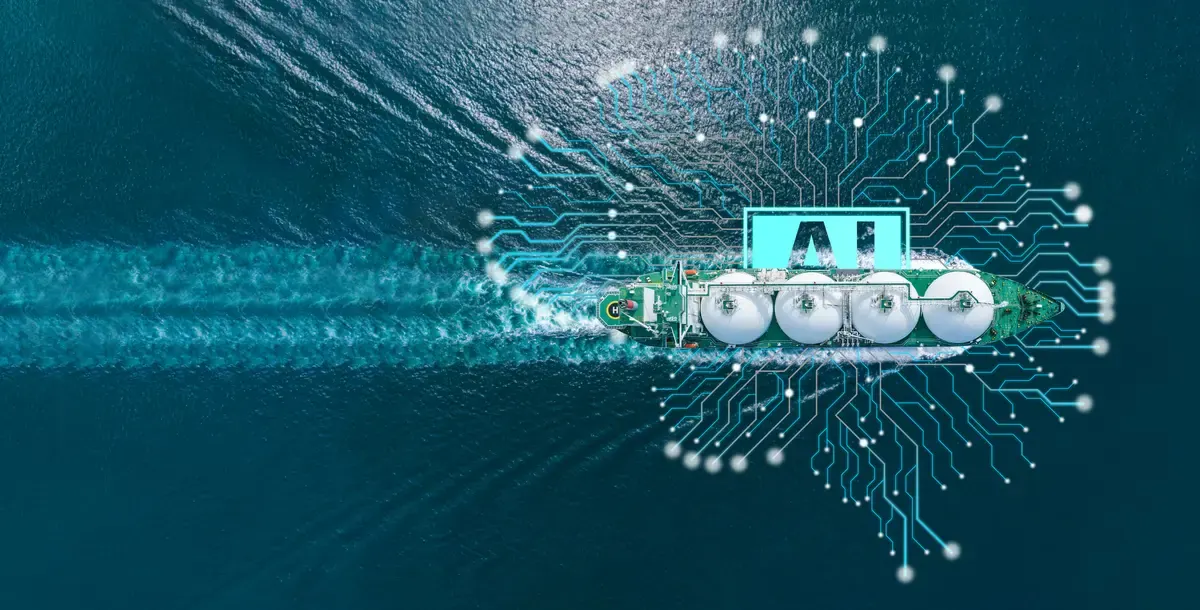
The maritime industry depends on engineering expertise, operational discipline, regulation and coordination between vessels and shore teams. Ships operate for long periods across changing conditions, while companies manage machinery, crews, maintenance, documentation, compliance, procurement and commercial requirements across multiple locations.
Artificial Intelligence is becoming an important tool for managing this complexity. Its value extends beyond chatbots. AI can analyse vessel data, identify unusual operating patterns, support maintenance decisions, automate document-heavy processes, improve ship-to-shore communication and turn large volumes of information into practical recommendations.
Maritime organisations already generate data from machinery sensors, navigation systems, fuel reports, maintenance records, voyage systems, procurement platforms, crew databases, inspections and compliance documents. The challenge is no longer simply collecting information. It is understanding that information quickly enough to support better decisions.
Traditional maritime software mainly records and displays data. AI adds an analytical layer that can identify patterns, highlight risks and recommend next steps. This can transform existing systems from passive reporting tools into intelligent decision-support platforms.
One of the most valuable applications is predictive maintenance. Marine equipment operates under demanding conditions, and unexpected failures can cause delays, costly repairs and downtime. Traditional maintenance often relies on fixed schedules, running hours and manufacturer recommendations. AI can analyse equipment performance, sensor readings, operating conditions, maintenance history and previous failures to identify early signs of abnormal behaviour.
For example, an AI system may detect a gradual change in machinery performance before an alarm or breakdown occurs. It can alert the technical team and provide relevant historical information for investigation. The engineer remains responsible for the final decision, but AI helps ensure that potential problems are identified earlier.
Fleet management can also benefit significantly. Fleet managers need visibility across vessel performance, fuel consumption, maintenance status, voyage progress, technical issues, crew requirements and regulatory deadlines. Dashboards provide information, but teams still need to interpret it manually.
AI can prioritise the information that matters most. A fleet manager could ask which vessels require immediate attention, where fuel consumption is unusually high, which maintenance activities are approaching critical dates or where operating costs are increasing. Instead of reviewing multiple reports, the manager receives a focused operational summary.
Voyage optimisation is another important area. Route decisions depend on weather, speed, fuel consumption, vessel characteristics, schedules, safety requirements and commercial priorities. AI can evaluate these variables together and help operators identify more efficient strategies. The best route is not always the shortest; it may be the option that balances fuel use, arrival requirements, weather conditions and operational safety.
Even small improvements in fuel efficiency can create meaningful savings across a fleet. AI can compare similar voyages, identify unusual consumption patterns and highlight differences in vessel performance or operating behaviour.
Documentation is another major opportunity. Shipping involves certificates, technical manuals, inspection reports, safety procedures, maintenance records, purchasing documents, crew information and regulatory material. Employees often spend considerable time searching through files and emails to find the correct information.
AI-powered document systems can allow users to ask questions in natural language and retrieve answers from approved company documents. These systems can also classify files, extract key information, compare documents, identify missing fields and route information to the correct workflow. This reduces administrative effort while improving consistency.
Procurement and spare-parts management can benefit from similar automation. AI can organise supplier quotations, compare technical and commercial details, identify differences between offers and prepare structured information for purchasing teams. It can also analyse historical consumption and maintenance patterns to help forecast future spare-parts requirements.
Crew management is another area where AI can improve visibility. Intelligent systems can monitor certification expirations, training requirements, contracts, experience records and scheduling conflicts. By identifying upcoming issues early, they can support better planning and reduce the risk of operational disruption.
Safety and compliance processes can also become more data driven. AI can analyse incident reports, near misses, audits, inspections and safety observations to identify recurring risks and operational trends. This information can support training, inspections and preventive action. However, AI should assist qualified professionals rather than independently making critical safety or compliance decisions.
AI is also changing communication between ships and shore offices. Operational information often arrives through emails, reports, forms and messaging platforms, making it easy for important details to become fragmented. AI can analyse incoming messages, identify the vessel and issue involved, retrieve related records, create tasks and notify the appropriate team.
This creates opportunities for AI Agents. Unlike a simple software feature, an AI Agent can work toward an objective across multiple systems. For example, when a vessel reports an equipment issue, an agent could review the message, retrieve maintenance history, locate technical documentation, check spare-parts availability and prepare a summary for the technical superintendent.
Similar agents could organise procurement requests, prepare daily fleet briefings or monitor certificates and compliance deadlines. These systems can participate in workflows while keeping human approval in place for important decisions.
Because shipping is safety critical, AI implementation must remain human centred. The goal is not uncontrolled automation or the removal of professional judgement. The goal is to reduce information overload and help maritime professionals focus on the issues requiring their expertise.
Successful AI adoption should begin with business problems rather than technology. Organisations should identify repetitive tasks, fragmented information, slow approval processes, frequent delays and areas where better visibility could improve performance.
Data quality, integration and cybersecurity are equally important. AI cannot produce reliable results from incomplete or poorly structured information. Companies must also define access permissions, approval processes, monitoring and audit trails, particularly when AI systems can modify records or initiate workflows.
At Unovative, we believe the future of maritime technology lies in connecting operational knowledge, modern software and Artificial Intelligence. Maritime companies may not need another standalone application. In many cases, greater value can come from adding intelligence to the systems and workflows they already use.
The next stage of maritime digital transformation will be about making software more capable of understanding context and supporting decisions. Ships will continue to depend on experienced crews, and fleets will continue to require skilled technical and operational teams. What will change is the quality and speed of the intelligence available to them.
AI can help engineers identify problems earlier, fleet managers focus on priorities, procurement teams evaluate information faster and organisations gain better visibility across operations. Used responsibly, it can become an intelligent layer across the maritime enterprise.