
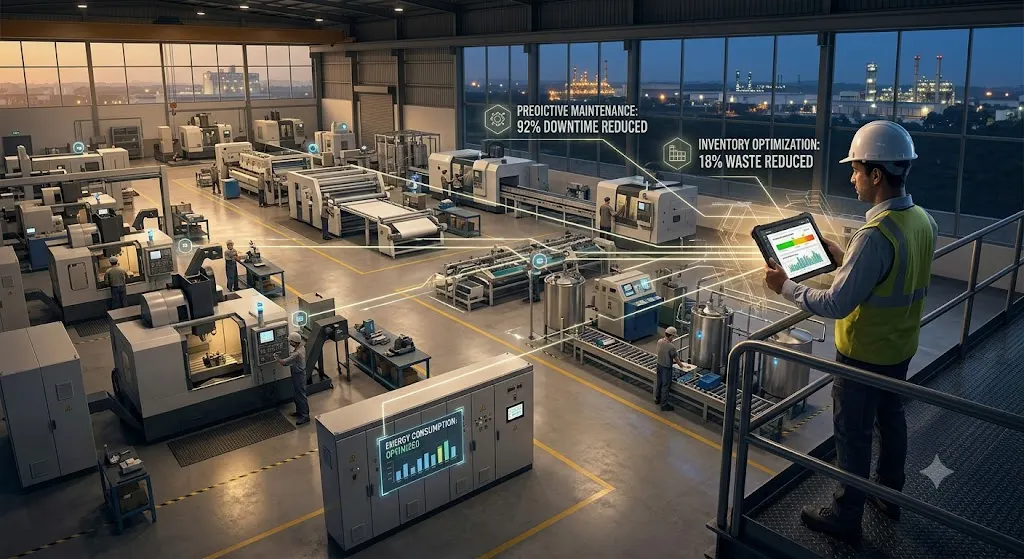
Manufacturing is the backbone of Boisar’s economy. The Tarapur MIDC houses hundreds of factories, making the region a major hub for textiles, chemicals, steel, and heavy engineering. But running a modern factory is getting harder every day.
Picture a typical Monday morning. You arrive at the factory only to find a key machine broken. The maintenance team is scrambling. Production is delayed, and customers are angry. This stressful reality is all too common. Supply chain issues, rising costs, and strict quality rules put immense pressure on owners.
To stay competitive, you can no longer rely on guesswork or manual reports. You need fast, accurate data. That is where Artificial Intelligence (AI) comes in. AI is not just for global tech giants anymore. Today, business AI and data analytics are accessible tools that help local factories solve daily problems. Let's explore how AI can help Boisar manufacturers make smarter decisions.
From Traditional to Smart Manufacturing
For years, factory managers relied on past experience and monthly reports. If a machine broke, they fixed it. If supplies ran out, they bought more. This wait-and-see approach causes costly delays and lost revenue.
Going digital changes everything. By connecting machines to software, you collect data instantly. AI then reviews this data in real time. Instead of waiting for problems to happen, managers can predict and stop them. This shift from reactive to proactive decision-making is the biggest benefit of AI.
5 Ways AI Improves Decision-Making
Custom AI software can transform your factory operations. Here are five practical ways it helps:
1. Stopping Breakdowns Before They Happen
Unexpected equipment failures cost money. When a key machine stops, the whole production line stops. AI solves this with predictive maintenance. Sensors track a machine's temperature, vibration, and sound. AI learns what the machine looks like when it is healthy. If a motor runs slightly hotter than normal, the AI alerts your team immediately. You can then schedule repairs during a planned shift change, preventing sudden stops.
2. Managing Inventory and Supply Chains
Managing raw materials is tricky. Keeping too much inventory wastes cash, while keeping too little halts production. AI removes the guesswork. It looks at past sales, market trends, and seasonal changes to accurately forecast demand. This tells purchasing managers exactly what and when to reorder. You get exactly what you need without wasting warehouse space.
3. Improving Quality Control
In industries like textiles and chemicals, quality is everything. Manual checks are slow and prone to error. Tired workers can easily miss a small defect on a fast assembly line. AI-powered cameras offer a better way. They inspect products at high speeds and instantly flag items that fail quality standards. If a specific machine keeps making bad parts, managers can pause and fix it before wasting more raw material.
4. Cutting Energy Costs
Factories in Tarapur consume massive amounts of power. High energy bills hurt your bottom line. AI tracks power use across your whole facility. It spots patterns and finds exactly where energy is being wasted. For example, AI might notice heavy equipment idling unnecessarily between shifts. Managers can use this data to adjust schedules and significantly lower electricity bills.
5. Keeping Workers Safe and Focused
Many people worry that AI will replace jobs. In reality, AI makes factory jobs better and safer. Factory floors can be dangerous. AI-powered cameras can spot safety risks, like a worker missing a helmet or a forklift driving too fast. The system sends a quick alert before an accident happens. Plus, when AI handles boring, repetitive tasks, your workers can focus on more important jobs. They spend less time filling out paper forms and more time improving the actual product.
Why Local Support Matters
Adopting new technology can feel overwhelming. Many owners worry about a long, complicated setup process. That is why you need a reliable technology partner.
Working with a Palghar-based IT company gives Boisar factories a distinct edge. A local partner knows how the Tarapur industrial area operates. They offer on-site consulting, custom software, and direct support. You do not need to hire a distant agency in Mumbai or Bangalore. Local experts make sure the software fits smoothly into your current daily workflows.
How to Start Using AI
You do not need to automate your entire factory overnight. The best approach is step-by-step:
- Find the Bottleneck: Look for the process that costs the most time or money. This could be machine downtime, high defect rates, or inventory shortages.
- Go Digital: AI needs data to work. Stop using paper records. Imagine checking your phone over morning tea and seeing exactly how your factory is running. Use basic digital tools or ERP software to track your daily operations and make this a reality.
- Run a Small Test: Pick one specific machine or process. For example, install sensors on your most critical machine to test predictive maintenance.
- Review and Grow: Check the results of the test. If the AI saves money and helps you decide better, expand the technology to other areas.
How Unovative Can Help
At Unovative, we help businesses move from manual work to smart, data-driven systems. As an IT and AI software company based in Palghar, we build tools tailored strictly for your needs. Whether you need to automate office tasks or build enterprise apps to monitor the factory floor, we design practical solutions that add real value.
Manufacturing in Boisar is highly competitive. To thrive, factory owners must replace guesswork with accurate data. By predicting failures, managing supplies, and tracking quality, AI boosts profits and cuts waste.
You do not have to figure this out alone. Change can be scary, but falling behind your competitors is worse. Taking the first step might seem challenging, but with the right planning and a local partner, the transition is smooth. If you want to explore AI for your factory, Unovative can help you review your technical needs and plan your next steps.
Conclusion
Manufacturing in Boisar is highly competitive. To thrive, factory owners must move past traditional guesswork and start making decisions based on accurate data.
AI is a powerful tool that makes this possible. By predicting machine failures, optimizing supply chains, and improving quality control, AI helps manufacturers reduce waste and increase profitability. Taking the first step toward digital transformation may seem challenging, but with the right planning and a reliable technology partner, the transition is seamless.