
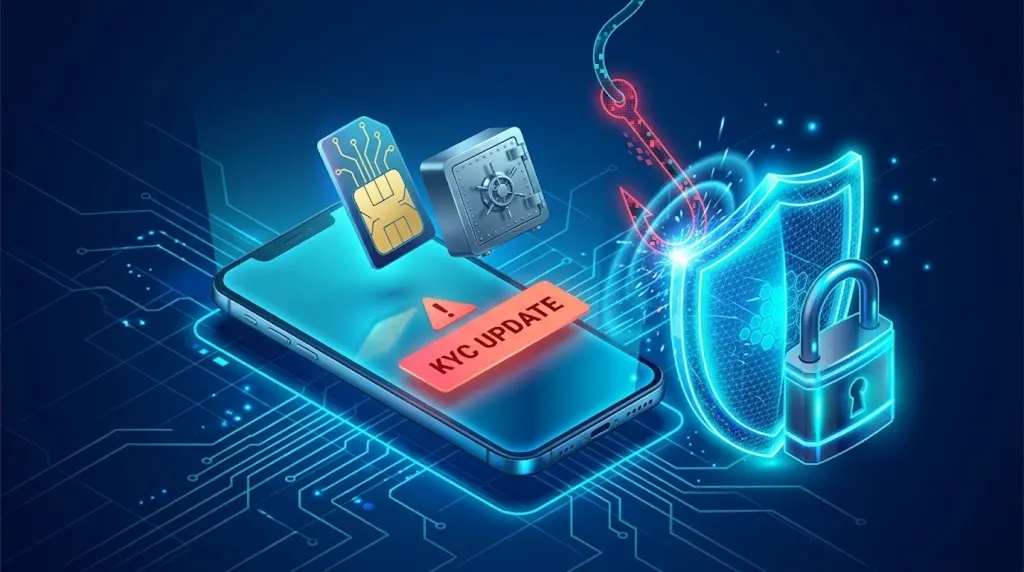
Digital banking makes life very easy. People across Palghar use mobile apps to pay bills and transfer money. A factory owner in the Tarapur MIDC can pay suppliers in seconds. A commuter in Virar can recharge their phone on the train. We rely completely on our digital accounts.
Cyber criminals know this. They know that losing access to your bank account is terrifying. They use this fear to steal your money.
KYC (Know Your Customer) and account blocking scams are spreading rapidly. Scammers send fake alerts claiming your bank account or SIM card will be blocked. They want you to panic. They want you to make a fast, careless mistake.
In this guide, we will explain exactly how these scams work. We will teach you how to spot a fake alert. We will also share the exact steps you must take if you lose money to online fraud.
The Psychology Behind the Scam
Scammers do not use complex computer hacking to steal your money. They use simple psychology. They create a false sense of extreme urgency.
When you read a message saying your bank account will be frozen in ten minutes, your brain panics. You stop thinking clearly. You just want to fix the problem. The scammers rely on this blind panic. They know a calm person will notice their tricks. A panicked person will click any link they provide.
How the Fake KYC Scam Works
The KYC scam usually follows a very specific pattern. Knowing these steps is your best defense.
Step 1: The Threatening Message
The scam starts with an SMS or a WhatsApp message. It looks like an official bank alert. The message says your KYC is incomplete. It warns that your bank account will be suspended today. It provides a link to "update your KYC" immediately.
Step 2: The Fake Website
If you click the link, it opens a website. This website looks exactly like your real bank's login page. It asks for your username, password, and phone number. When you type these details, you are actually handing them directly to the scammer.
Step 3: The Fake Customer Care Call
Sometimes, the scammers call you directly. They pretend to be bank officials. They speak politely and professionally. They tell you there is a problem with your account. They offer to help you fix it over the phone.
Step 4: Remote Access and Stolen OTPs
During the phone call, the fake bank officer asks you to download a "support app." They might ask you to install apps like AnyDesk, TeamViewer, or QuickSupport.
These are screen-sharing applications. If you install them and share the access code, the scammer can see your phone screen. They open your banking app. They transfer money to their own account. When your bank sends an OTP to confirm the transfer, the scammer sees it on your screen. They steal your money while you watch helplessly.
The SIM Card Blocking Threat
The SIM block scam is very similar to the KYC bank scam. Instead of your bank account, scammers threaten your mobile number.
You receive a message claiming your SIM card lacks proper e-KYC verification. It says your phone number will be disconnected in 24 hours. Just like the bank scam, it includes a dangerous link.
If a scammer tricks you into giving them your details, they can perform a "SIM swap." They transfer your phone number to a new blank SIM card in their possession. Suddenly, your phone loses its network signal. The scammer now receives all your phone calls. Most importantly, they receive all your banking OTPs.
The Impact on Local Businesses in Palghar
These scams do not just hurt individuals. They are a massive threat to local businesses.
Many small business owners in Boisar and Palghar use their personal phones for business banking. If a business owner falls for a KYC scam, the company loses its operational funds. You cannot pay your staff. You cannot buy raw materials.
Furthermore, if scammers gain access to a business phone, they can steal client contact lists. They might message your clients asking for fake payments. This completely destroys your business reputation. Companies must establish strict digital security rules to prevent this.
Palghar Police Cyber Awareness Campaigns
Local authorities are working hard to fight this growing problem. The Palghar Police run active cyber awareness campaigns across the district.
These campaigns aim to educate the public. The police awareness material already covers critical topics such as financial fraud, job fraud, matrimonial fraud, and safe social media use. These educational programs anchor the local fight against cybercrime. The police constantly monitor local trends to decide which scam examples to prioritize in their public warnings.
The police message is very clear: real banks never threaten to block your account over a text message. They never ask you to download screen-sharing apps.
How to Spot a Fake Bank Alert
You can protect yourself and your business by following a few simple rules. Train your family and your office staff to recognize these red flags.
- Look at the Sender ID: Real bank messages come from official shortcodes (like VM-HDFCBK). Scammers often send messages from regular 10-digit mobile numbers.
- Check for Spelling Mistakes: Fake messages often contain bad grammar and spelling errors. Official bank messages are carefully proofread.
- Never Click Direct Links: If a message contains a link to "update KYC," ignore it. Open your official banking app instead. Check for notifications there.
- Refuse Screen Sharing: Never download apps like AnyDesk or QuickSupport if a stranger asks you to. No real bank will ever ask to see your phone screen.
- Keep Your OTP Secret: Your One Time Password is your final lock. Never read it aloud over the phone. Never type it into an unverified website.
What to Do If You Lose Money
If you realize you have been scammed, you must act very fast. Time is critical. Do not feel embarrassed. Do not waste time arguing with the scammer. Follow these exact steps.
First, make the right phone call. For someone who has lost money, you must make the first step clear: call 1930 immediately. This is the national cyber crime helpline. Calling quickly gives the authorities a chance to freeze the stolen funds in the scammer's bank account.
Second, file an official report. After calling the helpline, report the incident through the National Cyber Crime Reporting Portal (cybercrime.gov.in). Provide all the details, including the phone numbers that called you and screenshots of the fake messages.
Finally, contact your real bank. Call your bank's official customer care number. Tell them your account is compromised. Ask them to block your debit cards and freeze internet banking until the issue is resolved.
How Unovative Builds Safer Business Workflows
While individuals must rely on good habits, businesses need stronger technical protection. Relying on simple SMS links and manual banking creates too much risk for modern companies.
Unovative is an IT company in Palghar that helps businesses work safely. We specialize in digital transformation and custom software development. We help local companies build highly secure internal systems.
Instead of relying on scattered apps, we build safe enterprise applications. We create secure portals where your staff can manage finances without exposing sensitive data. By investing in proper business automation, you remove human error. You protect your data, your funds, and your future.
Conclusion
KYC and SIM block scams are dangerous because they rely on fear. Scammers want to panic you into handing over your hard-earned money.
By staying calm, you take away their power. Remember that your bank will never rush you into a digital emergency over WhatsApp. Look closely at every message. Never download remote access apps. Educate your family and your employees about these daily threats. And remember, if a scam happens, dial 1930 immediately.
If your organization is exploring how to implement secure operational software to protect your business data, Unovative can help you evaluate the technical requirements, identify the right approach, and plan the next steps.