
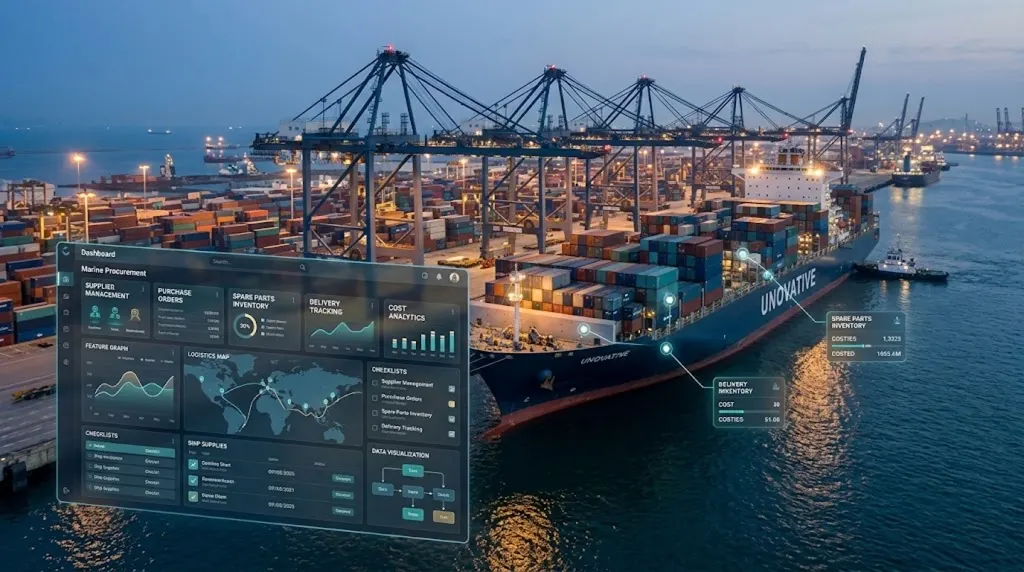
Marine procurement software helps shipping companies manage purchasing, suppliers, spare parts, approvals, and delivery records in one organized system. For ship managers and maritime procurement teams, it can make purchasing easier to track and help reduce delays caused by scattered emails, spreadsheets, and manual paperwork.
Marine procurement is more complex than ordinary business purchasing. Ships may need spare parts, technical equipment, safety supplies, tools, and provisions while operating across different ports. Procurement teams must coordinate vessel staff, shore offices, suppliers, finance teams, and delivery schedules.
The right software can connect these activities and give teams a clearer view of what is requested, approved, ordered, delivered, and paid for. This guide explains the essential features, business benefits, and best practices for choosing and implementing marine procurement software.
What Is Marine Procurement Software?
Marine procurement software is a digital system used to manage purchasing activities for ships, fleets, and maritime organizations. It helps teams move from a purchase request to supplier selection, order approval, delivery tracking, and invoice processing.
Depending on the system, it may also connect with inventory, vessel management, maintenance, accounting, and enterprise resource planning (ERP) applications.
Why maritime procurement needs specialized workflows
A typical office purchase may involve a request, an approval, and a delivery to one location. Ship procurement can involve more steps and tighter operational constraints.
For example, a vessel may need a replacement pump before its next port call. The technical team must identify the correct part, check availability, obtain approval, compare suppliers, arrange delivery, and confirm that the item reaches the right vessel on time.
A delay or incorrect part can affect maintenance plans and vessel operations. Procurement software helps teams keep these activities visible and organized.
Essential Features of Marine Procurement Software
Not every company needs every feature. The best system should match the size of the fleet, the type of purchases, the existing technology, and the complexity of the supply chain.
1. Digital Purchase Requisitions
A purchase requisition is a request to buy an item or service. Crew members, vessel engineers, or technical superintendents may raise requests when supplies or spare parts are needed.
The software should allow users to record details such as:
- Vessel name and delivery location.
- Item description and part number.
- Quantity and required delivery date.
- Reason for the request.
- Priority and supporting documents.
A structured request reduces confusion and makes it easier for procurement staff to understand what is required before contacting suppliers.
2. Supplier Database and Vendor Management
Marine procurement teams may work with suppliers across several ports and countries. Keeping supplier details in separate files can make comparisons and follow-ups difficult.
A supplier management feature can centralize contact details, product information, quotations, order history, and relevant documents.
Where suitable, teams can also record delivery performance, product quality issues, and response times. This helps buyers make more informed decisions when selecting suppliers.
Supplier records should be reviewed regularly so that outdated contacts, pricing, or business details do not lead to avoidable problems.
3. Quotation Comparison and Purchase Orders
Comparing supplier quotations is an important part of purchasing. However, the lowest quoted price may not represent the best overall option.
The software should help teams compare:
- Unit price and total order value.
- Shipping, handling, and other charges.
- Product specifications and approved alternatives.
- Delivery dates and availability.
- Warranty or quality terms, where applicable.
- Payment terms and currency.
Once the selected quotation is approved, the system can generate or record a purchase order. This creates a consistent record of what the company agreed to buy.
4. Approval Workflows and Spending Controls
Purchase requests often require approval based on value, item type, department, or urgency.
For example, a routine consumable order may follow a simple approval route, while an expensive engine component may need technical and financial review.
Marine procurement software can route requests to the right people, record approval decisions, and flag incomplete requests.
Good approval rules should also support genuine emergencies. A vessel should not face unnecessary delays because a routine workflow cannot handle an urgent operational requirement. Emergency purchases should follow a defined process with suitable review and documentation.
5. Spare Parts and Inventory Tracking
Spare parts management is closely connected to marine purchasing. Teams need to know which items are available, where they are stored, and whether a new purchase is necessary.
Inventory-related features may track:
- Part numbers and descriptions.
- Stock quantities and storage locations.
- Minimum stock levels.
- Items reserved for planned maintenance.
- Supplier lead times.
- Receipts, issues, and stock adjustments.
For example, before ordering a replacement filter, a buyer could check whether the correct part is already available at a vessel or warehouse.
Inventory accuracy matters. A system is only as reliable as the stock records and item information maintained by its users.
6. Delivery Tracking and Goods Receipt
A purchase order does not guarantee that the correct goods will arrive at the right place and time.
A useful system should help procurement teams track order status, expected delivery dates, shipping documents, and receipt confirmation.
When goods arrive, the receiving team should be able to record quantities, check specifications, and report damaged or missing items.
For vessel deliveries, the record should identify the intended ship, port, delivery contact, and required date. These details are especially important when vessels have changing schedules.
7. Reporting, Audit Trails, and Integrations
Managers need to understand how much the organization spends, where delays occur, and which suppliers perform well.
Reporting features may show purchasing costs, pending approvals, overdue orders, frequently purchased parts, and supplier delivery performance.
An audit trail should record important actions, such as changes to orders, approvals, and receipt confirmations. Access permissions should limit who can approve purchases or change sensitive records.
Integration is equally important. Connecting procurement with accounting, inventory, maintenance, and ERP systems can reduce repeated data entry and keep business records aligned.
Key Benefits of Marine Procurement Software
Better visibility into purchasing
A central system helps teams see which requests are pending, which orders have been placed, and which deliveries need attention.
This is useful for shore-based procurement managers who must coordinate several vessels and suppliers at the same time.
More consistent purchasing decisions
Structured requests, supplier comparisons, and approval records help teams follow the same purchasing process.
They also make it easier to review why a supplier was selected or why an urgent purchase was approved.
Stronger inventory planning
When procurement teams can view reliable stock records, they can identify items that need replenishment and avoid some unnecessary repeat orders.
The benefits depend on accurate stock data, clear ownership, and regular reconciliation.
Improved coordination between vessel and shore teams
Crew members, technical teams, procurement staff, finance teams, and suppliers need to share information.
A common system can reduce the need to search through long email threads to find an order status or delivery update.
More useful cost and supplier reporting
Consolidated records help managers compare spending across vessels, categories, suppliers, and time periods.
This supports better budgeting and can reveal opportunities to consolidate orders or review frequently purchased items.
These benefits are potential outcomes, not automatic guarantees. They depend on the quality of the implementation, user adoption, and the accuracy of operational data.
Best Practices for Implementing Marine Procurement Software
Choosing software is only one part of the process. A successful implementation also requires clear procedures, reliable data, and staff involvement.
1. Map the Existing Procurement Process
Document how a request moves from the vessel to the procurement team, supplier, receiving team, and finance department.
Identify common delays, repeated data entry, missing approvals, and unclear responsibilities. Use these findings to define what the new system must improve.
2. Standardize Item and Supplier Data
Different teams may describe the same spare part in different ways. This can lead to duplicate records, incorrect orders, and poor reporting.
Create consistent item descriptions, part numbers, measurement units, supplier records, and vessel identifiers. Where possible, preserve manufacturer references and approved alternatives.
Clean data before migration and assign responsibility for maintaining it.
3. Define Approval Limits and Emergency Rules
Set clear approval levels based on spending limits, purchase categories, and operational risk.
Define how urgent purchases are handled, who can authorize them, and what documentation is required afterwards.
Review the rules with technical, procurement, finance, and vessel representatives before the system goes live.
4. Integrate Systems Where It Adds Value
Avoid creating another isolated database if existing applications already hold important information.
Assess whether procurement should connect with inventory, planned maintenance, finance, ERP, or vessel management software.
Agree on which system owns each type of data and how updates will be exchanged. Test integrations carefully before relying on them for live purchasing.
5. Train Users and Test Real Scenarios
Procurement staff and vessel teams need to understand how to submit requests, review quotations, approve orders, record receipts, and report exceptions.
Test common scenarios before launch, including:
- A routine purchase with a standard approval.
- An urgent spare part request.
- A supplier delivery that is late.
- A shipment containing damaged or missing items.
- A purchase order that needs correction.
- An invoice that does not match the order or receipt.
Testing these cases helps reveal gaps before they affect day-to-day operations.
6. Track Results After Implementation
Measure whether the new process is improving the work it was designed to support.
Useful indicators include:
- Time from purchase request to approval.
- Time from approval to purchase order.
- Percentage of deliveries received by the required date.
- Number of overdue or incomplete orders.
- Differences between ordered and received quantities.
- Supplier performance and purchasing cost by category.
Establish a baseline before implementation. Review the results regularly and adjust the process when the data shows a problem.
How to Choose the Right Marine Procurement Software
Before selecting a product or commissioning a custom system, compare the available options against your real requirements.
Off-the-shelf software may be suitable when its workflows closely match your requirements. A configurable or custom-built application may be worth considering when existing tools cannot support essential processes or integrations.
The decision should be based on total cost, operational fit, security, usability, and long-term maintenance not just the number of features shown in a product demonstration.
Maritime Digitalization and Data Exchange
Procurement does not operate in isolation. It is part of a wider maritime environment in which vessels, ports, suppliers, and shore offices exchange information.
The International Maritime Organization (IMO) explains how standardized electronic data exchange can support more consistent communication between maritime stakeholders. Its Maritime Single Window guidance focuses on information exchanged between ships and public authorities during port calls. This is distinct from procurement software, but it illustrates why consistent data and interoperability matter across maritime operations.
For procurement teams, the practical lesson is to plan integrations carefully, use consistent records, protect sensitive information, and avoid unnecessary duplicate data entry.
How Unovative Can Help
Every shipping business has its own procurement process. Some teams need better visibility across existing applications, while others may need a new workflow to connect vessel requests, supplier records, approvals, and reporting.
Unovative is an IT and AI software company based in Palghar, Maharashtra, with an international presence in Ho Chi Minh City, Vietnam. Its published services include digital transformation, enterprise applications, and custom-built applications.
Through its digital transformation services, Unovative can discuss technology approaches for modernizing business workflows and connecting applications.
For a maritime organization considering a procurement platform, a potential project could begin by mapping the current purchasing process, identifying integration needs, defining user roles, and prioritizing the features that solve the most important operational problems.
These are possible project approaches, not a claim that Unovative sells a ready-made marine procurement product.
If your organization is reviewing its procurement workflow or exploring custom maritime software, contact Unovative to discuss the requirements and suitable next steps.
Conclusion
Marine procurement software can help maritime organizations manage purchase requests, supplier quotations, approvals, spare parts, deliveries, and purchasing reports in a more structured way.
The strongest results come from combining suitable software with accurate data, clear approval rules, well-defined responsibilities, and regular performance reviews.
Start by identifying the biggest procurement challenges in your current process. Then compare software options, test realistic scenarios, and implement improvements in manageable stages.
A well-planned system can give vessel and shore teams better visibility into purchasing and provide a stronger foundation for connected maritime operations.