
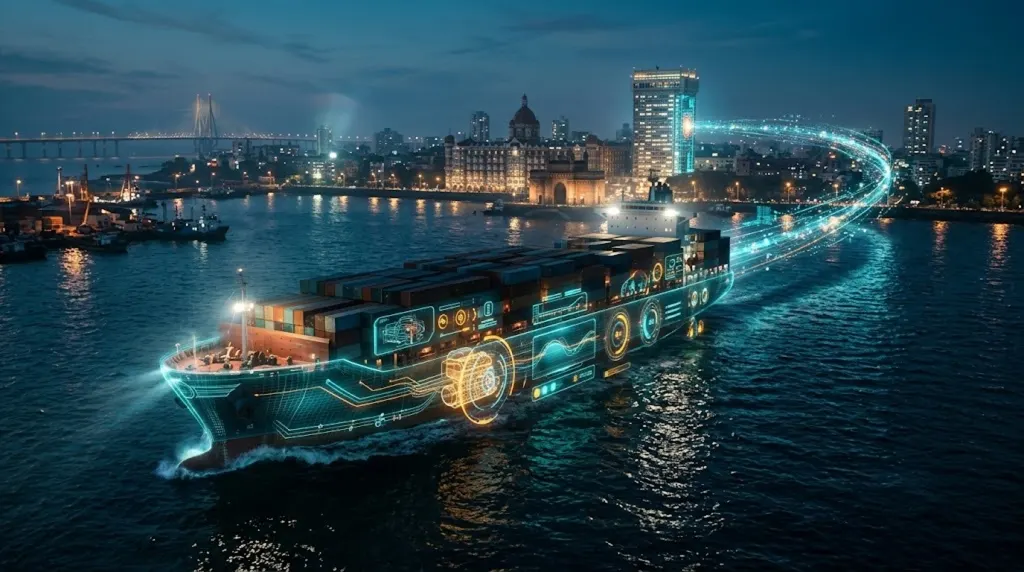
Mumbai is the shore-side heart of Indian shipping. The Directorate General of Shipping is based here, and the city is home to ship managers, crewing agencies, ship agents, chandlers and port service firms. Much of the work that keeps vessels moving happens in these offices, not at sea.
Yet many of these teams still run on email threads, spreadsheets and PDF reports. AI-powered maritime software is changing that. It reads documents, spots patterns in vessel data and flags issues early, so shore teams spend less time chasing information and more time making decisions.
This guide is for owners, fleet managers, technical superintendents and operations heads at Mumbai-based maritime companies. It explains where AI helps most, how to start, and what to watch out for.
The pressure on shore-side teams
Shore teams handle a steady flow of work for every vessel:
- Daily noon reports, defect reports and survey records.
- Purchase requests, quotations and invoices for spares and stores.
- Crew documents, certificates, contracts and change plans.
- Port call paperwork, agency updates and cost approvals.
Each item is small. Across a fleet, the volume becomes huge. Important details get buried in inboxes, and managers find problems only after they become costly.
Regulation is also pushing shipping towards digital work. Under the IMO's FAL Convention, a Maritime Single Window has been mandatory since 1 January 2024. Governments must offer one digital platform for ship-to-port data, and data should be submitted once and reused. Companies that keep clean, structured data find it far easier to work with systems like this.
What "AI-powered" really means in maritime software
AI is not a robot captain. In most shore offices, it is a layer of intelligence inside everyday software.
In simple terms, AI-powered maritime software can:
- Read and sort documents: pull key fields from invoices, certificates and reports.
- Find patterns in data: spot unusual fuel use, repeated defects or rising costs.
- Predict what comes next: estimate when a part may fail or a certificate will lapse.
- Assist people: draft summaries and suggest next steps for a human to approve.
The decision stays with qualified staff. AI simply puts the right information in front of them faster.
Where AI-Powered Maritime Software Delivers Results
AI-powered maritime software works best on high-volume, repeatable tasks. Here are the areas where Mumbai's shore teams usually see value first.
1. Ship management and technical operations
Technical teams receive a constant stream of defect reports, running hours and maintenance records. AI can group similar defects, highlight repeat issues on a vessel and flag equipment that may need attention. Superintendents get a short list of priorities instead of a long inbox.
2. Procurement and cost control
Marine procurement involves many vendors, ports and currencies. AI can read quotations, compare prices against past orders and flag invoices that do not match the purchase order. This helps finance and purchasing teams catch errors and control repair and spares costs.
3. Crew management
Crewing offices handle thousands of documents. AI can extract details from certificates, track expiry dates and alert planners before a seafarer's document lapses. It can also help match available crew to upcoming vacancies based on rank, experience and certification.
4. Port calls and voyage reporting
Noon reports and port call updates often arrive in different formats. AI can turn them into structured data and spot gaps or errors. Operations teams then get a clear, live view of each voyage and its costs.
5. Management dashboards and decision support
Once data is structured, leaders can see fleet performance, open defects, crew status and spending in one place. AI can add early warnings, such as a vessel whose costs are drifting above budget.
Ports are moving in the same direction. According to Indian Infrastructure, Maritime India Vision 2030 places strong emphasis on port digitalization, and Mumbai Port has used sensor-based dashboards. As ports become more digital, shipping companies that connect their own systems will work with them more smoothly.
How to Introduce AI Into Your Maritime Operations
AI projects often struggle when they start too big. A phased approach keeps risk low and shows value early.
- Pick one painful workflow. Choose something measurable, such as invoice checking or certificate tracking.
- Check your data. AI needs clean records. Standardize vessel names, part codes and vendor lists first.
- Run a short pilot. Test the solution on a few vessels or one team. Compare time and error rates before and after.
- Keep people in the loop. Let staff review and approve AI suggestions, especially for safety and cost decisions.
- Connect and scale. Link the tool to your existing ERP, accounts or ship management system, then extend it.
Risks to plan for
- Poor data quality: weak inputs lead to weak predictions.
- Data security: vessel, crew and commercial data must be protected.
- Low adoption: if the tool feels harder than email, staff will avoid it.
- Over-reliance: AI suggests; qualified people decide.
Off-the-shelf or custom AI-powered maritime software?
Packaged ship management products cover common needs and can be quicker to start. But many Mumbai firms have their own approval chains, vendor networks and reporting formats that a standard product does not fit.
Custom AI-powered maritime software can be shaped around those workflows and connected to the systems you already use. The right choice depends on how unique your process is and how much it affects your costs and service quality.
Choosing the right maritime software development company matters here. Look for a partner that understands both shipping workflows and AI, and that will start with your process rather than a ready-made product.
How Unovative Can Help
Unovative is an IT and AI software company headquartered in Palghar, a short distance from Mumbai's maritime business hub. We build custom software, automation and AI solutions for enterprises, including maritime companies.
Our digital transformation services help modernize existing applications and automate operations. Our Business AI Data & Analytics service builds trusted data foundations, dashboards and industry-relevant analytics.
For a Mumbai-based shipping company, that can mean:
- Mapping your technical, procurement or crewing workflow before writing any code.
- Building AI-assisted document reading for invoices, certificates and reports.
- Creating fleet dashboards that bring vessel, crew and cost data together.
- Connecting new tools with your existing systems instead of replacing everything.
When building AI-powered maritime software, we prefer to start with one clear problem, prove value through a pilot and then scale.
For a practical look at specific use cases, read our guide to AI in ship management for technical and fleet teams.
Conclusion
AI-powered maritime software is not about replacing seafarers or shore staff. It is about giving Mumbai's maritime teams faster, clearer information so they can act before small issues become costly ones.
The most practical gains come from everyday work: technical reports, procurement, crew documents, voyage data and management reporting. Start with one workflow, clean your data, keep people in control and scale step by step.
With regulation and ports both moving towards digital systems, companies that build strong data and AI foundations now will be better placed to compete.
Ready to explore what AI can do for your maritime operations? Book a 30-minute intro call with Unovative and tell us the problem you want to solve.