
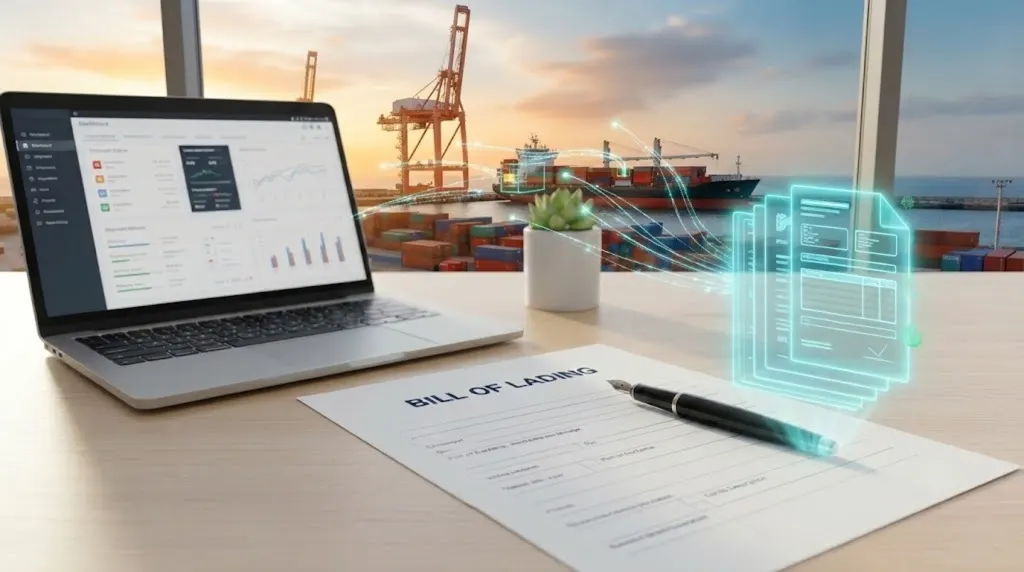
Mumbai's shipping ecosystem runs on paperwork. Shipping line agencies, NVOCCs, freight forwarders and customs brokers around Mumbai Port and JNPA handle bills of lading, shipping instructions, cargo manifests and customs filings for every shipment.
Much of this work still moves through email, Excel and PDF attachments. Cargo documentation software built around your own workflow can change that. It captures shipment data once, checks it automatically and reuses it across every document, so teams spend less time retyping and correcting details.
This guide explains where documentation problems usually start, what custom software can fix, and how Mumbai shipping companies can roll it out step by step.
The documents that slow teams down
A single export shipment can involve many related documents, including:
- Booking confirmations and shipping instructions from the shipper.
- Draft and final bills of lading.
- Verified Gross Mass (VGM) declarations for containers.
- Cargo manifests and customs filings.
- Dangerous goods declarations, where relevant.
- Delivery orders, invoices and release documents at destination.
Each one repeats much of the same data: shipper, consignee, ports, container numbers, weights and cargo descriptions.
Most documentation mistakes are small but costly. A container number is mistyped, a weight differs between documents, or a consignee name changes in one place but not another. These errors lead to amendment requests, delays at the port, extra charges and frustrated customers. When the same data is typed into several files by different people, mismatches are almost guaranteed.
Why Rules and Regulations Raise the Stakes
Cargo documentation is not just administration. It is tied to safety and legal requirements.
For example, under SOLAS regulation VI/2, the verified gross mass of a packed container has been a condition for loading since 1 July 2016. The shipper must state it in the shipping document and provide it in time for the ship's stowage plan. A missing or late VGM can mean a container misses its vessel.
In India, the legal framework is also being modernised. In July 2025, Parliament passed the Bills of Lading Bill 2025, replacing the Indian Bills of Lading Act, 1856, to update and simplify the legal framework for shipping documents.
As rules change and more filing moves online, companies with clean, structured data will adapt faster than those relying on manual files.
What Custom Cargo Documentation Software Can Fix
Generic tools can store documents, but they rarely understand how a Mumbai shipping office actually works. Custom cargo documentation software is built around your shipment flow, your customers and your approval steps.
1. Enter data once, use it everywhere
Shipment details are captured once, from the booking or shipping instruction. The system then fills the bill of lading draft, manifest data and other documents automatically. This removes most retyping and the mismatches that come with it.
2. Automatic checks before documents go out
The software can check for missing fields, wrong container number formats, weight differences between documents or missing VGM. Staff see warnings before a document is issued, not after a customer or port raises a query.
3. Draft approvals and version control
Bill of lading drafts often go back and forth with shippers. A custom system can send drafts for online approval, record every change and keep a clear history of who approved what and when. This reduces disputes and confusion over the "final" version.
4. Reading incoming documents with AI
Shipping instructions and commercial invoices often arrive as PDFs or scanned images. AI-assisted document reading can extract key fields and pre-fill the shipment record for a person to review. Unovative explains this approach in more detail in its article on AI document processing for enterprises.
5. Dashboards and deadline tracking
Managers can see which shipments are missing documents, which drafts are waiting for approval and which cut-offs are close. Instead of chasing updates by phone, the team works from one live view.
Packaged freight and shipping platforms cover standard needs and can be quicker to start. But many Mumbai offices have their own customer formats, approval chains and trade-lane rules. Custom cargo documentation software can follow those rules exactly, so your team does not have to work around the tool.
Custom software does not need to replace everything. It can connect with your accounting software, CRM and email, and prepare data in the formats needed for customs and port platforms. Exact integration options depend on each platform's access rules, so a good partner will confirm these early.
How to Roll Out Custom Cargo Documentation Software
Rolling out cargo documentation software works best in phases. This keeps risk low and helps your team adopt the new system.
- Map your current process. Follow one shipment from booking to release and note every document, handover and spreadsheet.
- Pick the biggest pain point. For many offices, this is bill of lading drafting or VGM collection.
- Standardise your data. Clean up customer names, port codes and commodity descriptions.
- Build a focused pilot. Start with one trade lane, one customer group or one document type.
- Measure and expand. Track amendment requests, turnaround time and missed cut-offs, then scale to more documents and teams.
Questions to ask a software partner
When choosing a shipping software company in Mumbai or a custom software development company in Mumbai, ask:
- Do they understand shipping documents and port workflows?
- How will they handle data checks, approvals and audit trails?
- Can they integrate with your accounting and email systems?
- Who owns the code and the data?
- What support do they offer after go-live?
How Unovative Can Help
Unovative is an IT and AI software company headquartered in Palghar, serving maritime and shipping businesses across Palghar and Mumbai. We build custom software, automation and AI solutions shaped around how each business actually works.
Through our enterprise application services, we design and build custom business applications. Our digital transformation services help modernise existing systems and automate operations.
For Mumbai shipping companies, that can include:
- Mapping your documentation workflow from booking to release.
- Building a central shipment record that feeds all cargo documents.
- Adding automatic checks, draft approvals and version history.
- Using AI to read incoming shipping instructions and invoices.
- Creating dashboards for deadlines, pending drafts and missing documents.
We prefer to start with one clear problem, prove the value through a pilot and then scale. For a wider view of AI in the sector, read how AI-powered software is transforming maritime operations in Mumbai.
Conclusion
Cargo documentation does not have to depend on retyping, email chains and last-minute corrections. Custom cargo documentation software lets Mumbai shipping companies enter data once, check it automatically and issue accurate documents faster.
With safety rules such as VGM already in force and India's shipping document law being modernised, now is a practical time to put your documentation on a stronger digital footing. Start with your biggest pain point, keep your team involved and scale what works.
Ready to reduce documentation errors and delays? Book a 30-minute intro call with Unovative and tell us about your current process.